There continues to be questions about what the removal of waste by property owners after the PHAI ends will look like. Here are some answers.
In the future, do I have to remove the soil from my property? Is it dangerous?
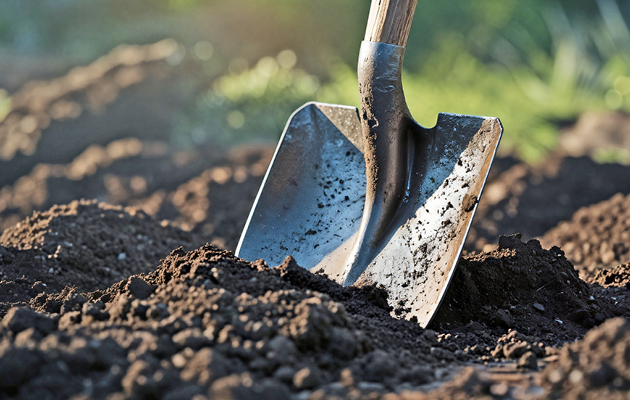
No, you do not have to remove the soil. Residents have the option to leave slightly contaminated soil in place because it does not pose a significant risk to human health or safety.
You will have the OPTION to remove the soil in future if desired.
If you plan to do any excavation in an area where there is known waste or in an area where you are unsure, you may remove the contaminated soil at that time. For example, if you install a pool in your yard and are placing the pool where historic low-level radioactive waste (LLRW) remains in the soil, that soil can be collected by Canadian Nuclear Laboratories (CNL) when the area is being dug for the pool in the first 20 years after the Port Hope Area Initiative (PHAI) ends. The facility will continue to accept waste from certified contractors following the initial 20-year period.
Should you eat the dirt if it contains LLRW? No.
Should you eat any dirt? Probably not, without testing any dirt may contain a combination of minerals, microscopic metals and bacteria.
Why does CNL use safety precautions when working on private properties if the residents don’t need to do the same?
CNL is operating the PHAI under a nuclear licence issued by the Canadian Nuclear Safety Commission (CNSC). The licence issued outlines what specific actions must be taken by CNL when completing the PHAI, to protect workers and the public daily.
Residents do not require a licence from the CNSC to complete work in their yards in Port Hope. The levels of contamination, that have been found in the soil through testing by CNL, do not require nuclear licensing and are safe for the public.
Is the cost of Real Estate in Port Hope affected by PHAI activities?
CNL actively monitors the local housing market in Port Hope. The Property Value Protection Program (PVP) uses a two‑part, evidence-based approach to determine property values in Port Hope from real-time market data from (CREA) Canadian Real Estate Association, (OREA) Ontario Real Estate Association and (CLAR) Central Lakes Association of REALTORS® and Independent analysis from Real Property Analytics.
A comprehensive review of over 10,700 home sales found:
- No diminution in property values near project sites
- Port Hope property value trends align with comparable communities.
- Port Hope has seen modest but slightly stronger price growth (+2.7%) since 2016 compared to surrounding areas.
- Market shifts, including the 2022 peak and correction, were seen across all communities and are tied to broader economic conditions, not the project.
- Local trends reflect the broader market, with potential for property restoration to support long-term value increases.
- Concluding that there is no evidence that PHAI activities have negatively impacted residential property values in Port Hope.